
Case Study: Rapid Improvement in Post-Fall Knee Pain Through Fascial Counterstrain
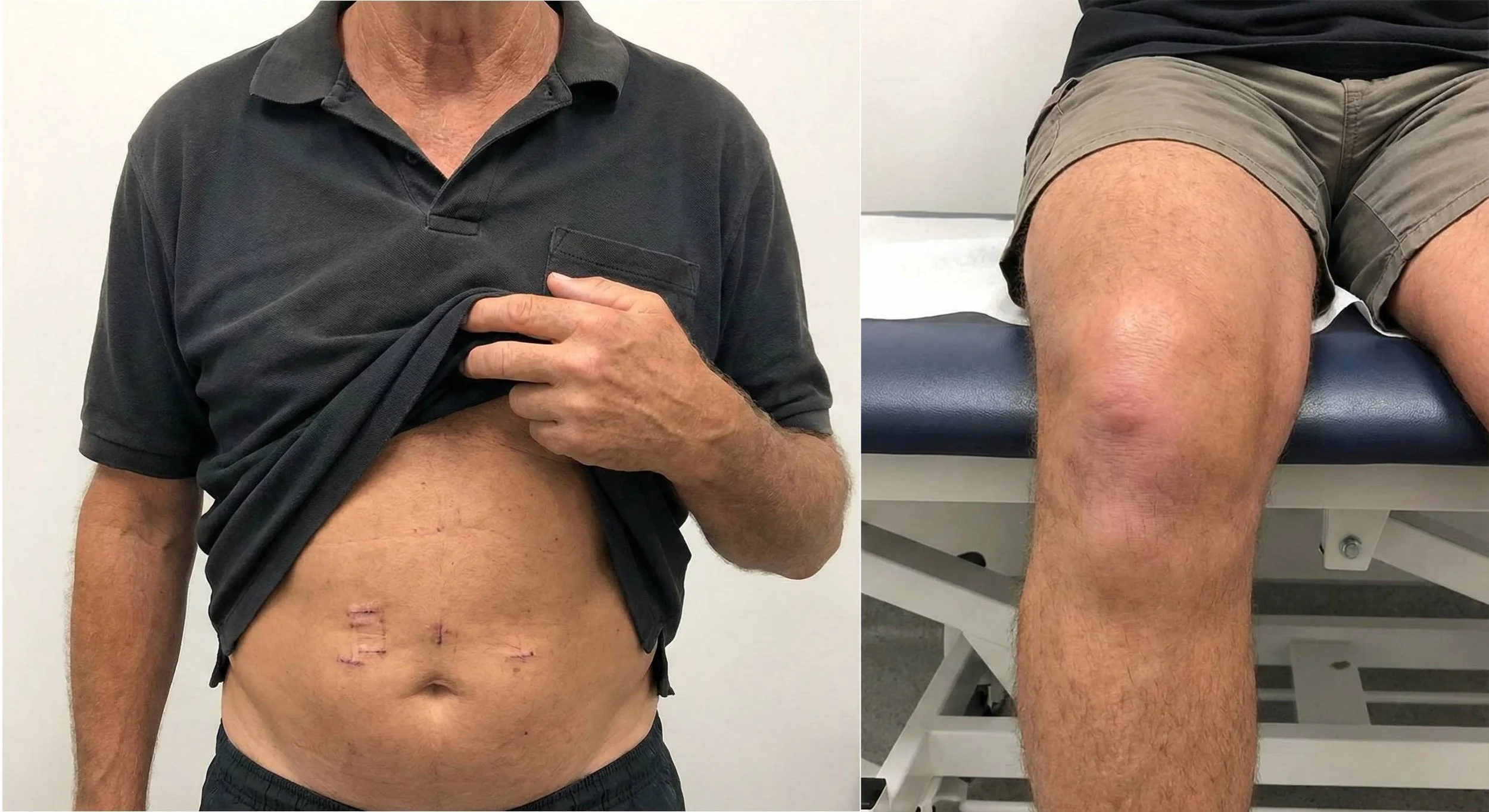
Sometimes knee pain isn’t just a knee problem.
(Fascial Counterstrain Treatment – 30-Minute Session)
Disclaimer: The following case study is based on a real treatment session. Identifying details have been changed to protect patient confidentiality.
Background
A patient attended the clinic one week after a fall, reporting significant right knee pain, swelling, and difficulty bending the knee. But there was no bruise nor a scratch. The fall happened out of nowhere — their sandal broke as their foot slipped into a small hole in the pavement, causing them to land heavily on the ground.
The pain set in quickly. They felt discomfort around the front, sides, and back of the knee, with symptoms radiating down toward the ankle. Interestingly, they also recalled some intermittent knee discomfort at the gym before this incident, which suggested there might have been pre-existing soft-tissue or vascular irritation waiting to surface.
During our conversation, another important detail emerged. A year earlier, they experienced severe abdominal pain that became so intense they vomited. They were taken to hospital, where doctors initially suspected an intussusception. Emergency surgery revealed something different — the intestines weren’t telescoping, but instead were stuck together by dense scar tissue. The operation involved releasing these adhesions.
This piece of history turned out to be highly relevant.
The Complaint
The knee pain became dramatically worse after they sat on the floor for an extended period during a family party. They described the sensation vividly:
“Super stiff and painful… it felt like someone pumped liquid into a sausage.”
They struggled to sleep, couldn’t find a comfortable position, and had difficulty bending the knee enough to drive or sit properly. Anti-inflammatories helped for the first couple of days, and Panadol afterward provided only mild relief.
They also noted:
Bilateral hip pain when lying on their side
Occasional lower back pain since the fall
All of this told me the knee wasn’t acting alone.
The Hidden Link
On examination, their right knee was visibly swollen — especially at the back of the knee (popliteal fossa). They walked with a limp, and bending the knee was limited to 90 degrees, far below what’s needed for going down stairs or sitting comfortably on a couch.
But the most significant findings weren’t in the knee at all.
Fascial Counterstrain Diagnostic Findings
Using the Fascial Counterstrain assessment protocol, several key patterns appeared:
Firm, restricted abdominal region
Tightness and tenderness around the lower rib cage (7th and 8th ribs)
Palpable lymphatic congestion throughout the abdomen
Sensitivity along the sympathetic nerve chain in the thoracic region
Reduced mobility in abdominal and visceral structures
Fascial tension indicating a link between the knee lymphatic system and the visceral lymphatic system
These results suggested the knee pain was being amplified by lymphatic restriction and autonomic dysfunction, not just local mechanical injury.
Why This Matters
The lymphatic system drains fluid from tissues. If lymph flow becomes sluggish anywhere — especially in the abdomen, where major lymphatic channels converge — swelling and pain may appear in distant regions, such as the knees and ankles.
This patient also had a history of abdominal adhesions. Scar tissue in the abdomen can restrict the fascial wrapping around lymphatic vessels and autonomic nerves, making the body more reactive to even small injuries.
The Diaphragm Connection
Further assessment revealed restrictions around the lower rib cage, suggesting tension in the diaphragm.
The diaphragm is more than a breathing muscle — it is the anatomical divider between the chest and the abdomen. Several major veins pass through or adjacent to it, including:
Azygos vein
Hemiazygos vein
Inferior vena cava
If the diaphragm is under strain, these vessels may not glide or expand normally, affecting venous return and contributing to congestion in the lower limbs.
Nerve Control of Blood Vessels
The lower limb’s circulation is also influenced by nerves, especially:
Sympathetic nervous system — which increases vascular tone (vasoconstriction)
Parasympathetic system — which decreases vascular tone (vasodilation)
Nervi vasorum — tiny nerves controlling artery and vein behaviour
Lumbosacral plexus nerves, such as the femoral and sciatic nerves, which also influence vascular supply
When sympathetic tension is high — as we saw in this case — swelling and pain can increase dramatically.
The fall didn’t just injure the knee.
It triggered a chain reaction in old abdominal restrictions, lymphatic pathways, and autonomic nerves.
Treatment Approach
The treatment session focused on restoring healthy drainage and calming the autonomic nervous system rather than working directly on the knee.
Techniques included:
Abdominal lymphatic drainage
Sympathetic nervous system release
Diaphragm release to improve venous return
Lower extremity lymphatic releases
Lower extremity somatic nerve release
These techniques work together to reduce congestion, improve fluid movement, and reduce the nervous system’s protective guarding.
Results
Before treatment:
- Right knee range of motion: 0–90 degrees
After a single session:
- Right knee range of motion: 0–135 degrees
This improvement happened without any direct knee manipulation or bending the knee into painful range.
Their walking became smoother, their knee felt more mobile, and they described an overall sense of “lightness” through the body.
The Takeaway
This case is a clear reminder that:
Not all knee pain is caused by the knee itself.
By using a whole-body, Fascial Counterstrain approach, we could identify the deeper factors contributing to swelling and pain:
Past abdominal surgery
Adhesions and restricted lymphatic flow
Diaphragm tension
Old injuries
Autonomic nervous system overload
The fall may have initiated the symptoms, but the underlying restrictions amplified the response.
Through Fascial Counterstrain, we were able to:
Improve lymphatic drainage
Reduce nerve irritation
Restore knee mobility
Ease whole-body tension
The patient’s rapid improvement demonstrates how powerful this gentle, whole-body method can be in resolving pain — especially when symptoms don’t match the severity of the injury.
FAQs
1. Can knee pain come from somewhere other than the knee?
Yes. Knee pain can be influenced by restrictions in other parts of the body, including the abdomen, diaphragm, lymphatic system, and autonomic nerves. When these areas become congested or irritated — often due to past surgeries, old injuries, or stress — a minor fall without significant injury can trigger swelling and pain in the knee.
2. How can Fascial Counterstrain help with swelling or stiffness after an injury?
Fascial Counterstrain reduces tension in fascia surrounding nerves, blood vessels, and lymphatic structures. By improving lymphatic drainage and calming the autonomic nervous system, swelling can decrease quickly, allowing the knee to move more freely and comfortably.
3. Why did my knee range of motion improve without directly treating the knee?
The knee reacts to problems elsewhere. In this case, abdominal adhesions, diaphragm tension, and lymphatic congestion were restricting fluid movement and increasing protective muscle guarding. Once these deeper causes were treated, the knee naturally regained mobility — without any forceful manipulation.
4. I’ve had abdominal surgery before. Could that affect my knee pain now?
Yes and No. Abdominal surgeries can leave adhesions or scar tissue that restrict lymphatic flow and irritate autonomic nerves. This can make the lower limbs more prone to swelling, stiffness, or discomfort, especially after a fall or twist. Whether the knee pain is related to the above, our Fascial Counterstrain diagnostic protocol is particularly effective at addressing the root cause of the knee pain.
5. How many sessions do I need for this type of knee problem?
Every patient is different. Many people feel improvement after just one session, especially when the issue is lymphatic or autonomic in nature. However, chronic restrictions, old injuries, or multiple contributing factors may require several sessions for full and lasting results.
6. Is Fascial Counterstrain safe for swollen or painful knees?
Yes. Fascial Counterstrain is extremely gentle and does not involve forceful joint movements. This makes it safe for acute swelling, fresh injuries, sensitive nervous systems, and patients who cannot tolerate traditional hands-on treatment.
7. How do I know if my knee pain is mechanical or lymphatic/autonomic?
A detailed one-on-one assessment helps determine the source. If your pain is not improving with rest, appears disproportionate to the injury, involves widespread swelling, or feels connected to other areas like the abdomen or lower back, lymphatic or autonomic involvement may be contributing.