
Case Study: Restoring Two Years of Lost Shoulder Movement — By Treating the Nervous System
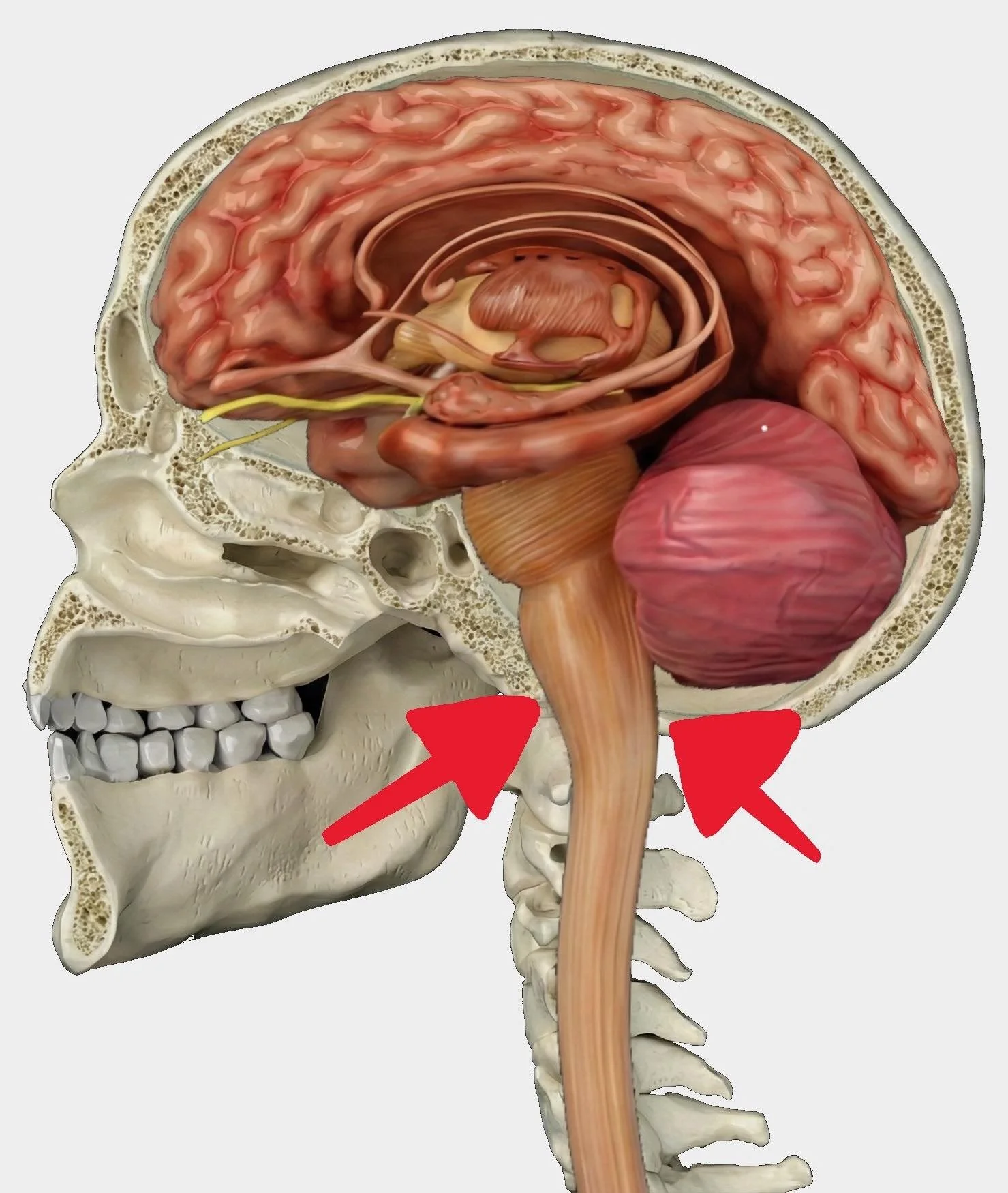
Sometimes the human body tells a story that goes far beyond the original injury.
(Fascial Counterstrain Treatment – 30-Minute Session)
Disclaimer: Details have been adapted to protect patient confidentiality.
The Background
When this patient arrived, their main concern was simple and straightforward:
a left gracilis tear sustained during a dance performance.
They recalled skipping their warm-up, feeling a sudden “pop” in the inner thigh, and immediately losing weight-bearing strength. Despite the injury, they danced for another two hours, worked the entire following day, and only realised the severity when nausea set in from the pain.
Over the next nine weeks, they were kept completely off dance and exercise. While strength gradually returned, one problem remained stubborn and confusing:
Their left shoulder — particularly circumduction — had been severely restricted for almost two years.
No pain.
No injury
Just a movement that “wouldn’t go any further,” no matter how much stretching or strengthening they tried.
In addition, they experienced:
tightness and heaviness in the neck
morning facial swelling
left upper limb weakness
left big-toe numbness
trembling in the left leg with exertion
At first glance, none of these seemed related.
But experience tells me: the body never produces random symptoms — there is always a story underneath.
The Assessment
The gracilis tear itself was clear-cut: a muscular strain with expected healing time.
But the shoulder restriction immediately stood out. The left arm could barely perform even a small arc of circumduction, while the right arm moved freely.
Interestingly, there was no pain, suggesting that the limitation was neurological rather than muscular.
Neck testing revealed dural tension. The spine — from coccyx to occiput — felt restricted, as if the body was protecting the nervous system. Multiple tender points confirmed a full-system involvement.
At this point, I knew the gracilis strain was not the main issue of this consultation.
The true question was:
What was preventing this patient from moving their shoulder normally for two whole years?
The Treatment: Following the Body’s Priorities
As with every session, I followed the order the body directed.
1. Start locally — the gracilis
Fascial Counterstrain and osteopathic techniques helped decompress swelling, realign the lower limb, and restore the strain’s mechanical balance. The muscle would now heal within normal timelines. It varies from 3 weeks to 2 months, depending on the severity.
2. Move to the spine — a full dural protection pattern
The entire spinal system showed irritation.
This revealed tension along the dura, the protective covering of the spinal cord — often responsible for unexplained weakness, tightness, and asymmetrical movement.
Priority restrictions appeared at the:
coccyx
sacrum
occiput
Each of these areas has a direct influence on dural tension and brainstem mechanics.
3. Nerve and lymphatic restrictions emerge
As dural restrictions released, the next layer revealed itself:
left radial nerve tension
lymphatic congestion in the left axilla
lymphatic restrictions around the rib cage
These findings explained the left arm weakness, the shoulder tightness, and the swelling pattern.
4. The final layer — the Anterior Longitudinal Ligament (ALL)
This ligament runs the length of the spine.
Releasing it helps reduce the “pulling” effect on the spinal column, and hence, the spinal cord.
Treatment time ran out shortly after — but the body had already given us enough clues.
The Result That Surprised the Patient
At the end of the session, I asked the patient to repeat the shoulder circumduction test.
They paused.
Their eyes widened.
For the first time in almost two years, their left shoulder moved through a full arc — smoothly, freely, without hesitation.
They described it as: “I didn’t know my shoulder could even move like that anymore.”
They had seen other practitioners, done months of stretching, followed exercise programs — but none of it helped because the shoulder wasn’t the real problem. The spinal cord was.
Afterthought: Understanding the Deeper Link
The occiput, dura, and spinal cord form a continuous system.
When these structures are tight or inflamed:
the brainstem becomes crowded
fluid movement around the cranium becomes restricted
inflammatory chemicals accumulate
the entire spinal cord becomes irritated
This creates a condition often described as "tethered cord-like tension" — a downward pull through the whole nervous system. (Remark: it is not exactly a Tethered Cord Syndrome which is another diagnosis)
When the spinal cord is irritated:
nerves cannot glide properly
the brachial plexus becomes hypersensitive
shoulder movement becomes restricted
unexplained tightness, weakness, and swelling appear
Once the tension in the dura and spinal cord released, the nerves had space to glide again — and the shoulder movement returned.
This is why Fascial Counterstrain can produce rapid improvements in movements that seem “stuck” for years.
What This Means for You
If you feel like you’ve been stretching, strengthening, or massaging the same area for months (or years) without improvement, the real issue may not be in the area of pain at all.
Often, the root cause lives deeper — in the nerves, the lymphatics, the fascia, or the protective reflexes of the body.
This is exactly what Fascial Counterstrain is designed to uncover.
Ready to Feel the Difference?
If you have:
unexplained tightness
chronic stiffness
movement that hasn’t improved despite exercises
old injuries that still affect your performance
a focused, one-on-one session can help identify the hidden patterns holding you back.
Book an appointment at Fascial Release Clinic in Glenelg to discover what your body has been trying to tell you.
FAQs
1. Why did treating the leg injury help the shoulder?
Because the body works as one interconnected system. The dural tension and spinal cord irritation were limiting nerve glide into the shoulder. Once these deeper restrictions were released, the shoulder regained full movement — even though it wasn’t painful.
2. How can Fascial Counterstrain improve movement so quickly?
FCS works on the body’s protective reflexes. When these reflexes are overactive due to inflammation or irritation, muscles and nerves become “locked.” Restoring the micro-lymphatic pump via fascial treatment, it releases the trapped pro-inflammatory chemical into the blood stream that will be metabolised by the liver later on. The local muscle guarding reflex is gone. As a result the movement restores immediately.
3. Do you always treat areas away from the painful site?
Only when the body directs it. If the true restriction is in the nerves, lymphatics, fascia around organ or blood vessels, or dura, treating the painful area alone will not resolve the issue. My approach is to treat what the body prioritises — not just where symptoms appear.
4. I’ve been stretching for months with no improvement. Can this approach help?
Yes. If stretching hasn’t changed your symptoms, it often means the issue isn’t muscular. FCS focuses on the hidden structures that stretching cannot influence — especially the nervous system and the periosteum (the “bone skin”).
5. How many sessions will I need?
Every case is unique. Some patients experience immediate change (as in this case), while deeper or chronic patterns may require several sessions. My goal is to restore function efficiently while respecting your body’s healing pace.